Strength Training

The Runner's Strength Guide

By Tom · The Smart Athlete 4 exercises · 30 min · Once a week
← Back to Guides

I've had sciatica, shin splints, plantar fasciitis and runner's knee. I learned that strength work deserves a place alongside running — consistency matters. These four exercises, done once a week for 30 minutes, can be part of a balanced training routine. They are not a substitute for assessment or treatment of an injury. No gym required. Just you and the ground.

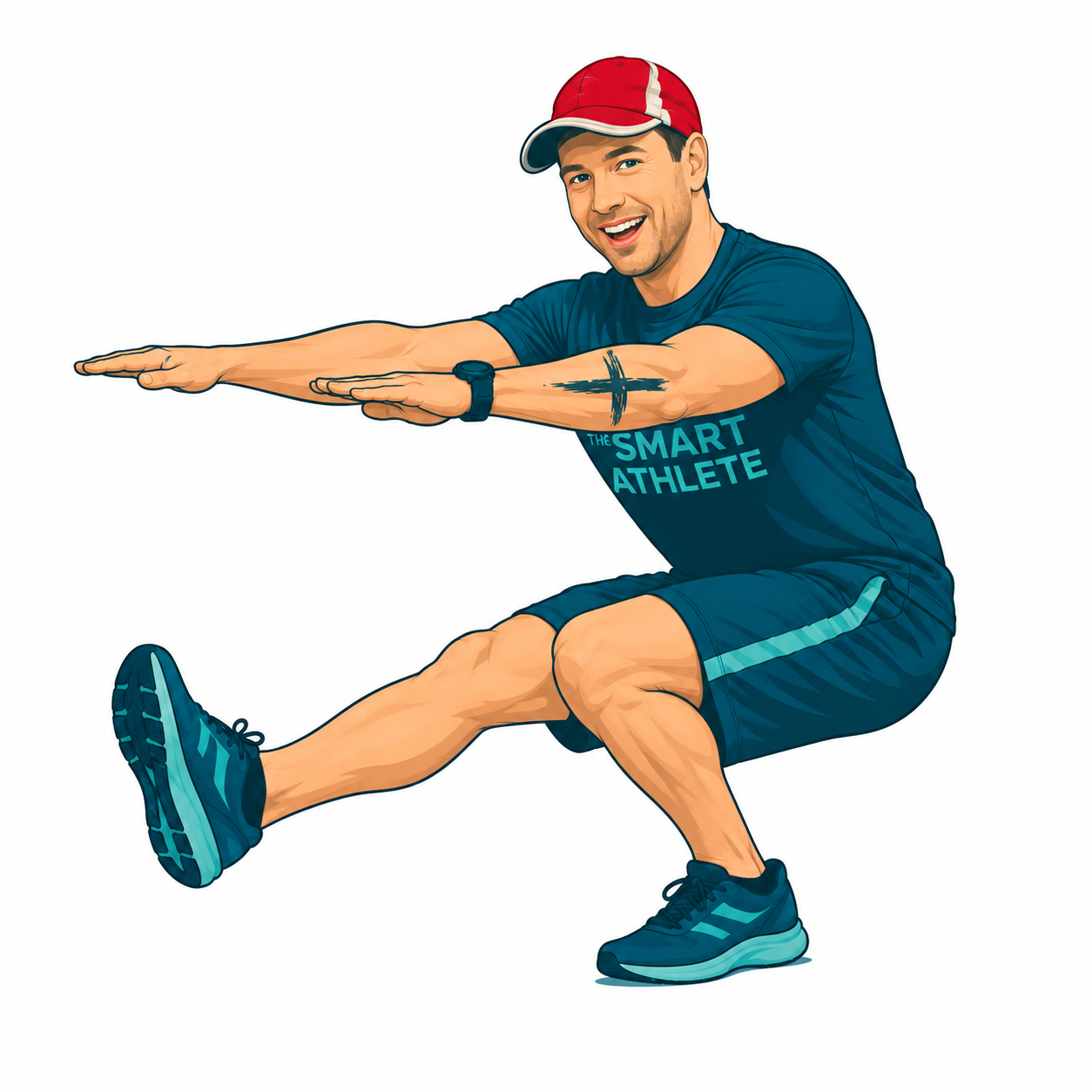
Tom demonstrating a single leg squat
01
Glutes · Quads · Balance

Single Leg Squat

💡 Why runners need this: Running is a single leg sport. Every stride lands on one foot. This builds the glute and quad strength that stabilises every stride and protects your knees.

This is the single most important exercise a runner can do. When you run, your entire body weight lands on one leg thousands of times. If that leg is not strong enough to handle the load, your knee, hip or ankle will eventually give way.

How to do it
  • 1
    Stand on one leg with the other leg extended slightly in front
  • 2
    Slowly lower yourself by bending the standing knee. Arms out for balance.
  • 3
    Go as low as is comfortable — aim for 90 degrees over time
  • 4
    Push back up slowly and with control
  • 5
    Keep your knee tracking over your toes throughout
💪 3 sets of 8 to 12 reps each leg
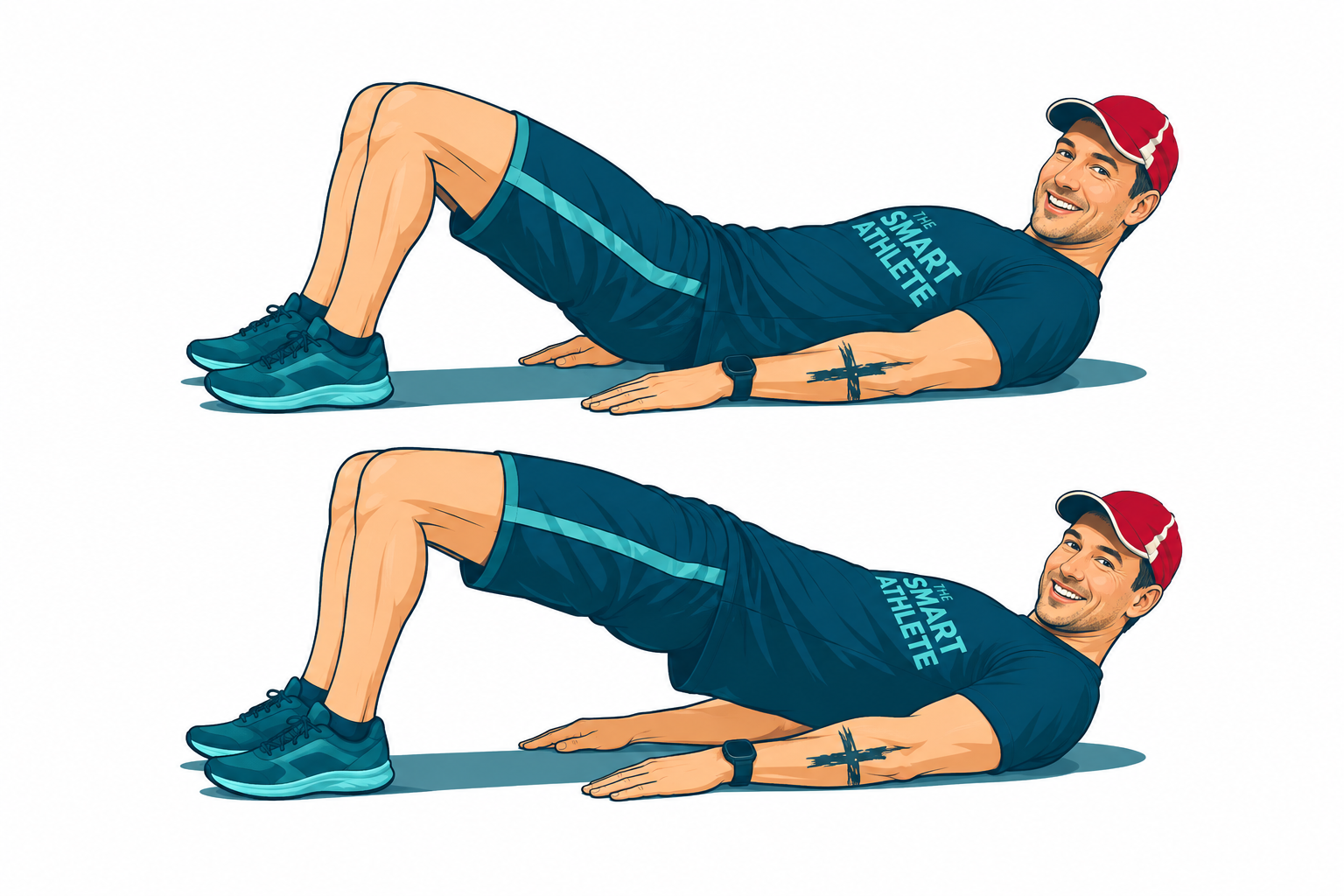
Tom demonstrating a glute bridge
02
Glutes · Hamstrings · Lower Back

Glute Bridge

💡 Why runners need this: Weak glutes are behind most running injuries. They cause your hips to drop, your knees to collapse inward, and your lower back to overcompensate. This fixes that.

Most runners have underactive glutes — meaning the muscle exists but doesn't fire properly during running. The glute bridge directly activates and strengthens the glutes, improving your power output and protecting everything from your lower back to your knees.

How to do it
  • 1
    Lie on your back with knees bent and feet flat on the floor
  • 2
    Push through your heels and lift your hips toward the ceiling
  • 3
    Squeeze your glutes hard at the top. Hold for 2 seconds.
  • 4
    Lower slowly and with control. Do not let your hips drop suddenly.
  • 5
    Keep your core engaged throughout — do not arch your lower back
💪 3 sets of 15 reps
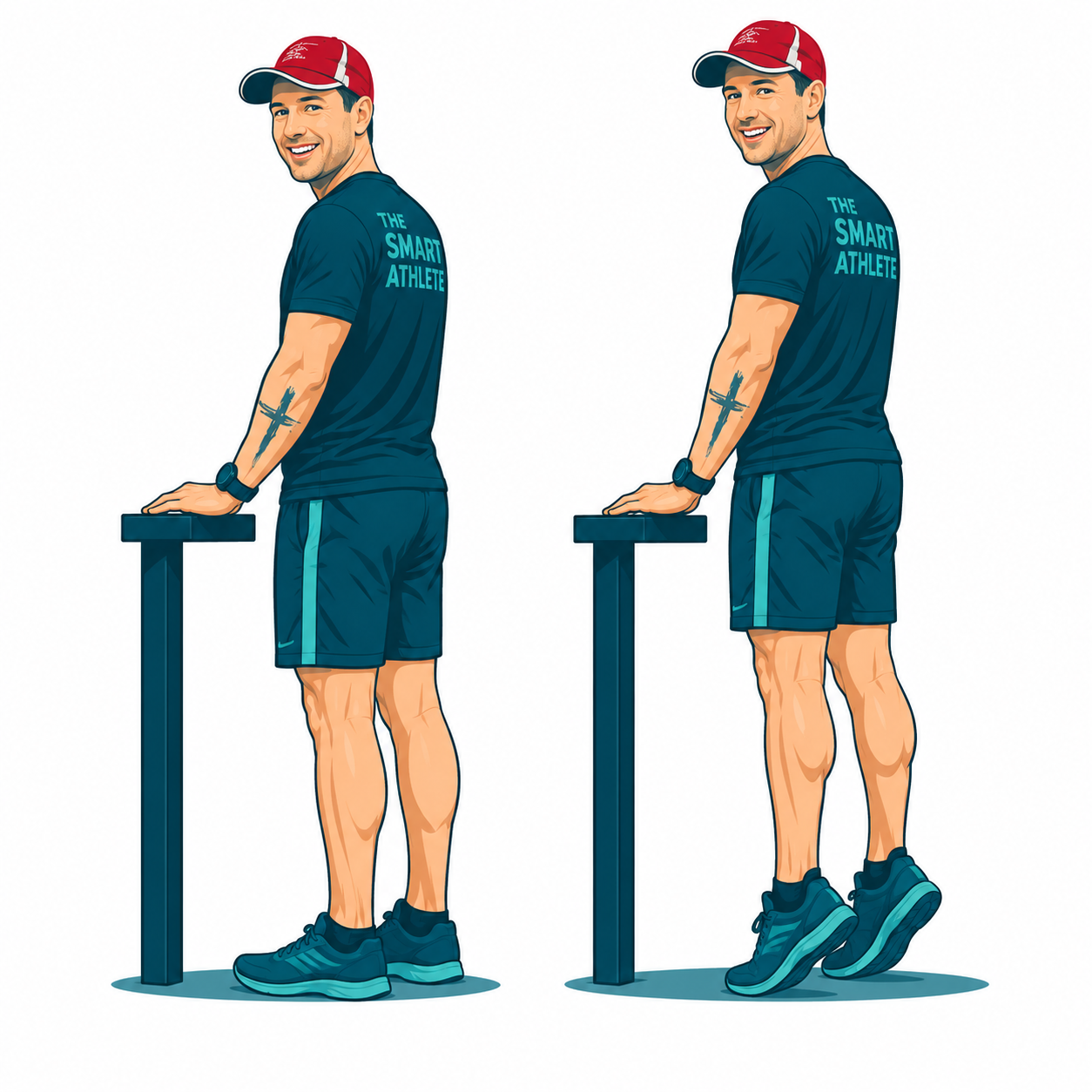
Tom demonstrating calf raises
03
Calves · Achilles · Plantar Fascia

Slow Calf Raise

💡 Why runners need this: Your calves absorb enormous impact on every kilometre. Loaded calf raises dramatically reduce your risk of Achilles tendon issues and plantar fasciitis.

The key word here is slow. Most people bounce through calf raises and get very little benefit. A slow, controlled calf raise builds genuine tendon and muscle strength in the calf complex — exactly what you need to handle the repetitive loading of distance running.

How to do it
  • 1
    Stand near a wall or hold a surface lightly for balance
  • 2
    Rise up onto your toes slowly — take 3 seconds to rise
  • 3
    Hold at the top for 1 second. Feel the squeeze in your calves.
  • 4
    Lower slowly — take 3 seconds to come back down
  • 5
    Progress to single leg calf raises as you get stronger
💪 3 sets of 15 to 20 reps
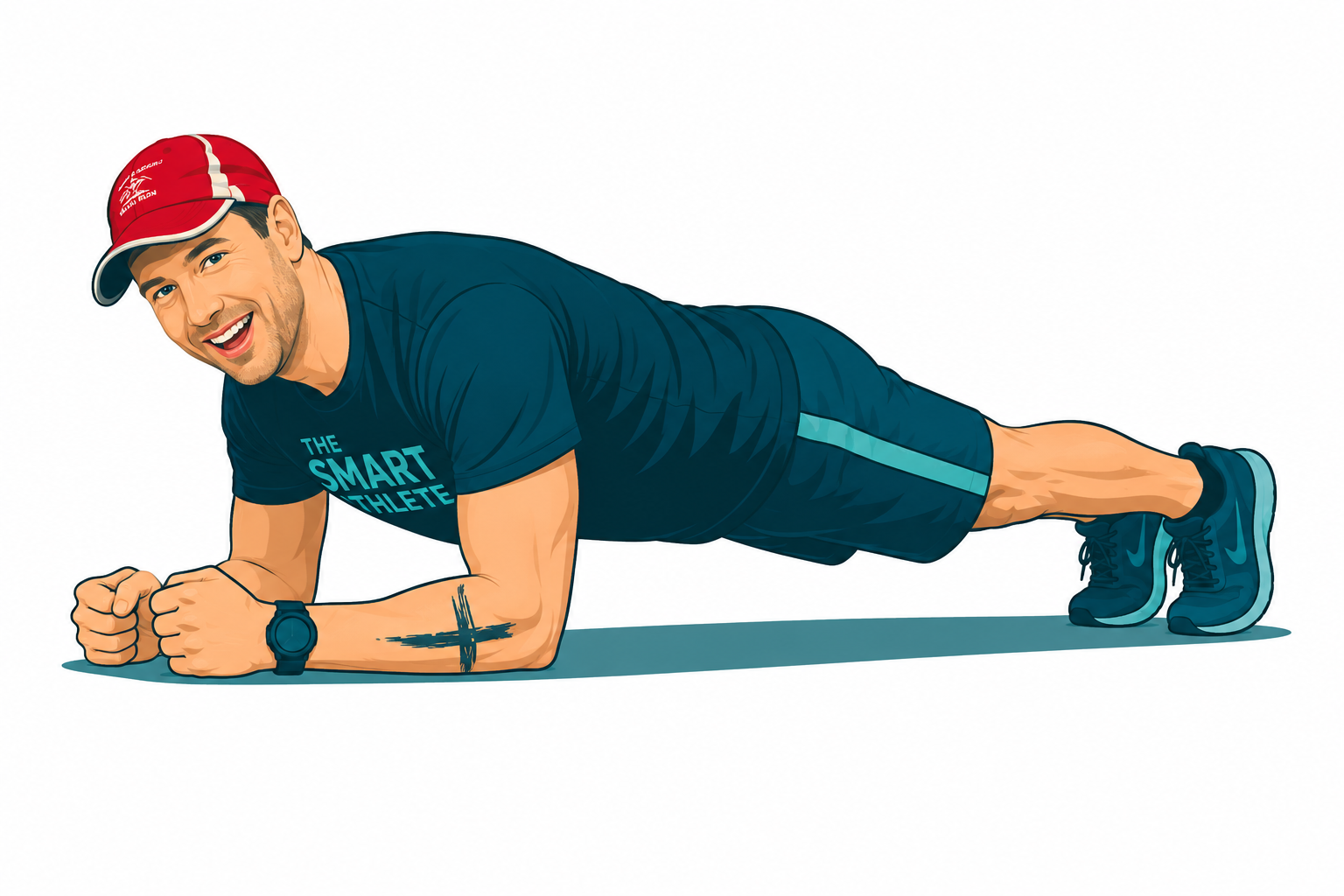
Tom demonstrating a plank
04
Core · Shoulders · Stability

The Plank

💡 Why runners need this: A strong core holds your running form together when you are tired. Core strength late in a race separates runners who hold their pace from those who fall apart.

When your core is weak, everything else suffers as you fatigue. Your hips drop, your arms cross your body, your stride shortens and your efficiency falls away. The plank builds the deep core stability that keeps your form intact when the kilometres get hard.

How to do it
  • 1
    Rest on your forearms and toes. Elbows directly below shoulders.
  • 2
    Keep your body in a straight line from head to heels
  • 3
    Engage your core — imagine pulling your belly button toward your spine
  • 4
    Do not let your hips sag or rise. Stay flat.
  • 5
    Breathe steadily. Hold the position.
💪 3 sets of 30 to 60 seconds
Your Weekly Routine

The Complete 30 Minute Session

Do this once a week. Twice if you can. Attach it to an easy run day — run first, strength after. That way it's already in your schedule and you're warmed up.

Single Leg Squat
3 sets × 8 to 12 reps each leg · Rest 60 sec
Glute Bridge
3 sets × 15 reps · Rest 45 sec
Slow Calf Raise
3 sets × 15 to 20 reps · Rest 45 sec
Plank
3 sets × 30 to 60 sec · Rest 30 sec

Start with what you can manage. If 8 squats is all you can do, do 8. The progression comes naturally over weeks. Do not rush it.

Want a plan that includes all of this?

Strength, running, recovery and mindset — all balanced and personalised for your life and your goals.

Book a Free Intro Call View Full Exercise Library